- Sales: +91-9887171455
- Support (24*7):+91-9461784129
- info@matrixwebinfotech.com

How AI Is Transforming the Stone and Marble Industry — From Quarry to Customer
Whales: Giants of the Ocean
September 14, 2026Казино Yard – способы пополнения счета и финансовые операции
September 18, 2026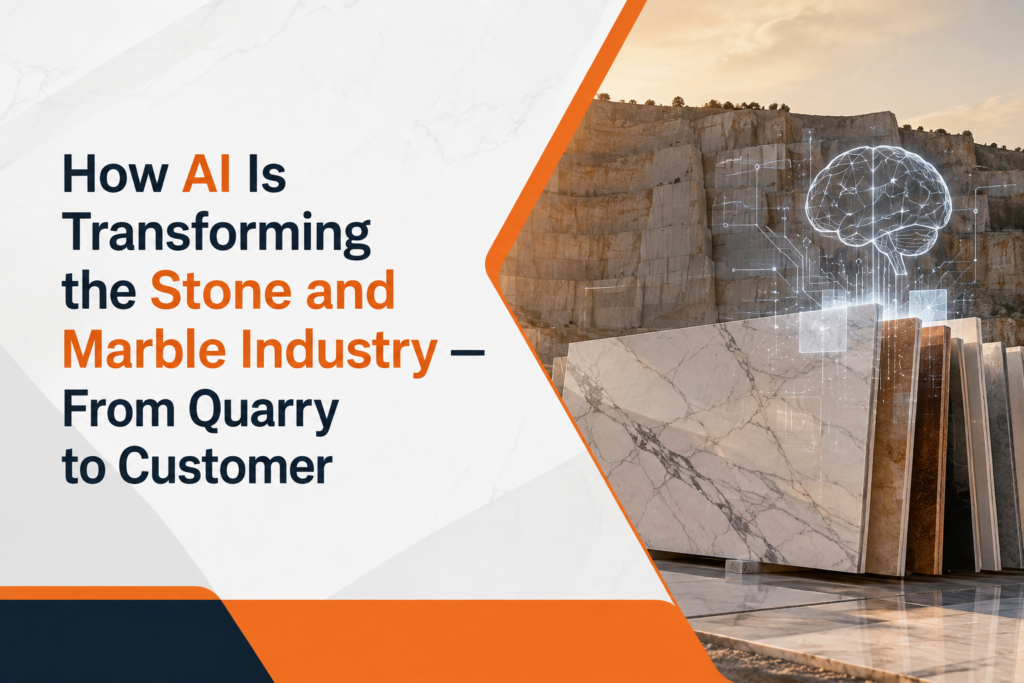
Stone has been extracted and processed in a similar manner for a long time; hence, it feels strange witnessing the speed of changes that are happening in the field. Quarry owners have started using sensors to map deposits before mining them. Factories utilize video cameras to capture small fissures which would usually be seen only after weeks when the slab is already cut. Somewhere in between these, artificial intelligence in the stone and marble industry has transformed from a phrase mentioned in the meetings to a tool operators depend on in their work. It has not substituted the labor; it has just made their life easier.
AI in the Stone and Marble Industry: A New Era for Quarries
For a long time, deciding where to dig came down to experience and a fair amount of guessing. Surveys took weeks, and even then, plenty of blocks came out fractured in ways nobody could've predicted at the surface. Machine-learning models fed on drone footage and ground-penetrating radar are now catching a lot of those weak zones before drilling even starts. It sounds like a small technical fix, but the effect on a quarry's bottom line isn't small at all fewer blocks lost means fewer weeks written off as a loss.
Smart Sorting and Cutting on the Factory Floor
Once the block reaches the factory, this gets more interesting. A vision system can now scan a slab for color, veining, and surface flaws in a few seconds work that used to take a trained sorter several minutes per piece, done by eye, done tired by 4pm. Cutting machines linked to these systems adjust pressure and angle as they go, based on the density they're reading in the stone right then. Fewer wasted slabs, more consistent finishes. For anyone exporting natural stone in bulk, that consistency is the difference between a smooth shipment and a client calling to ask why half the batch doesn't match.
How AI in the Stone and Marble Industry Is Changing Customer Experience
Traditionally, purchasing agents would choose products by viewing only a few samples at the showroom; sometimes they would make a big purchase based on the sample the size of a mug coaster, which was puzzling for me. Nowadays, this is changing. Today, thanks to the new developments in augmented reality technology a person can visualize a slab in the kitchen or foyer prior to the purchase. Some companies have developed AI-based configurators that recommend a finish depending on lighting and layout of a room. The overall process is not overly complicated; however, it takes care of a lot of usual complaints and problems resulting from sending back stones and reporting that "this is not what I ordered," which is a real headache for anyone dealing with rejected shipments.
Predictive Maintenance and Supply Chain Efficiency
The equipment of this sector does not breakdown without announcement. If a saw or polishing equipment malfunction occurs, the process can be stopped for several days and sometimes for a longer period if a spare part needs being ordered from abroad. It is because due to predictive maintenance and measurement of vibration, temperature and load of cutting machines it is possible to prevent failures by detecting deterioration first. On the other hand, the use of information technology for forecasting in logistics allows exporters to prepare for price fluctuations. No wonder that this kind of system is not something extraordinary but nevertheless, its effectiveness is helpful in keeping profit margins unharmed when dealing with increasingly high shipping prices.
The Future Role of AI in the Stone and Marble Industry
This isn't heading toward some fully automated, hands-off version of the trade, and I'd be skeptical of anyone claiming otherwise. The people who can judge a block of granite or read a marble vein by eye aren't going anywhere nothing I've seen comes close to that instinct yet. What's more realistic is a mix: AI in the stone and marble industry doing the repetitive measuring and predicting, while the calls on quality and appearance stay with the people who've actually spent years around the material.
Why Choose Matrix Web Infotech
Matrix Web Infotech has spent years working specifically with stone, marble, and mineral businesses, so we know the difference between generic marketing copy and content that actually speaks to buyers who care about grain, finish, and export grade. We help clients build websites and content that reflect how modern their operations already are, without losing the craftsmanship that makes this industry what it is. Whether that's SEO for a quarry's product pages or content explaining new processing methods to international buyers, Matrix Web Infotech handles the digital side so it actually matches the physical one.
Where Stone Businesses Go From Here
This trade isn't turning into a tech industry, and it probably shouldn't try to. But the businesses adopting these tools early in quarrying, cutting, quality checks, or how they sell are the ones seeing fewer wasted blocks and buyers who trust what they're ordering without seeing it in person first. In a market with thin margins and long memories, that trust is worth more than most upgrades on a spec sheet.
